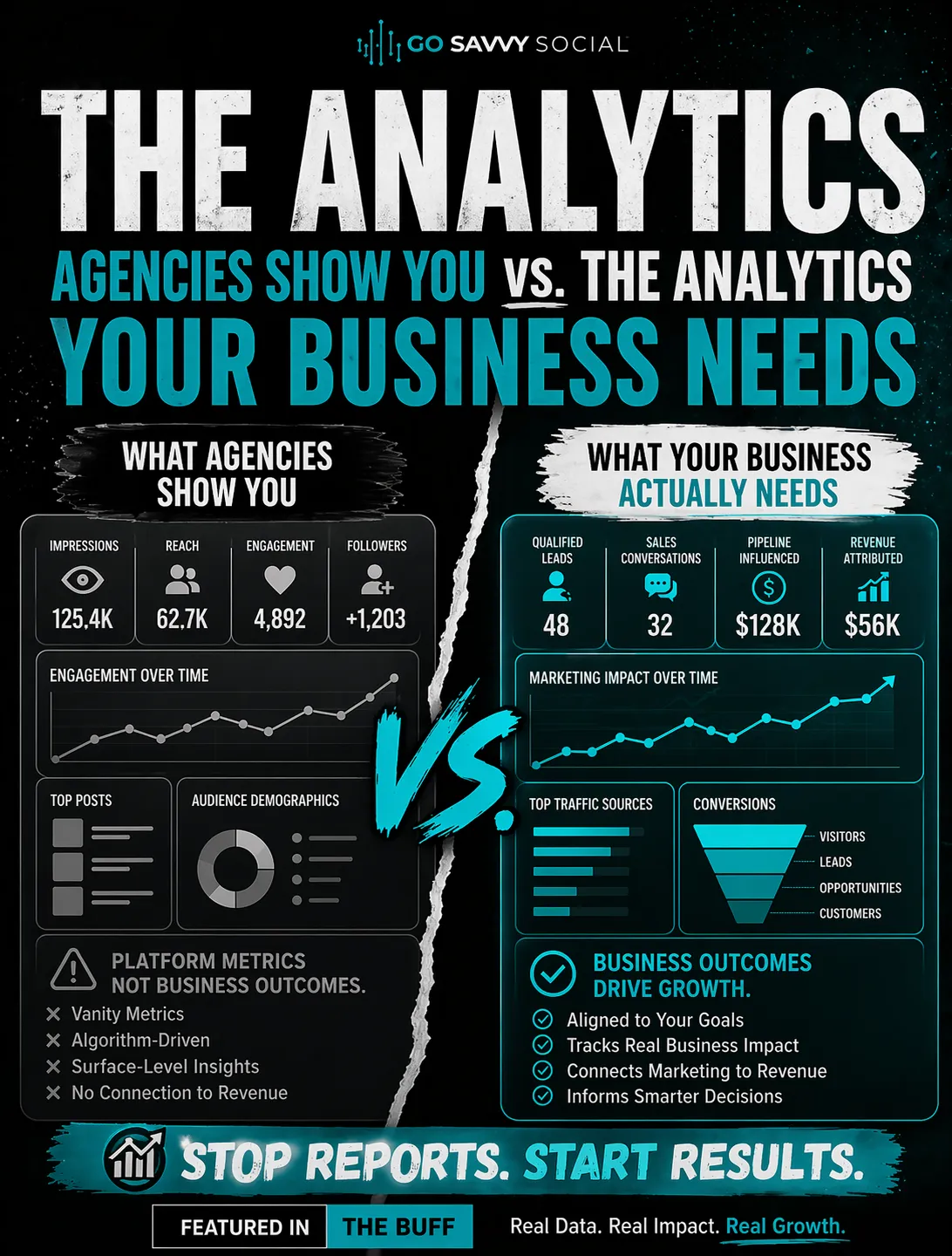
The Analytics Agencies Show You vs. The Analytics Your Business Actually Needs
Let’s call something out that most people don’t want to say:
The analytics you’re being shown… are not always aligned with your business outcomes.
And if you’ve ever looked at a report and thought: “Okay… but what does this actually mean for us?” You’re not wrong.
What Agencies Mean When They Say “Analytics”
When most agencies talk about analytics, they’re referring to:
impressions
reach
engagement
follower growth
click-through rates
These are platform metrics.
They show:
how content performed
how the algorithm responded
how much attention was captured
The Problem
None of those metrics directly tell you:
Did this drive revenue?
Did this create better opportunities?
Did this improve our position in the market?
Why This Happens
Because agencies are often reporting:
What platforms make easy to measure.
Not necessarily:
What businesses actually need to understand.
The Dashboard Illusion
Most reports are pulled from:
Instagram insights
Facebook dashboards
LinkedIn analytics
Google Analytics
And then compiled into something that looks clean, professional, and “data-driven.” But here’s the issue: Each platform is measuring success based on its own priorities. Not yours.
Platforms Optimize for:
time on platform
engagement
content interaction
Not:
your pipeline
your close rate
your revenue
So What Happens?
You get reports that say:
“Engagement is up 32%”
“Reach increased this month”
“Followers are growing”
But internally, you’re asking:
“Why doesn’t it feel like anything is changing?”
Because You’re Looking at Two Different Systems
Agency reports = platform performance Business reality = operational movement. And those don’t always align.
What You Should Be Doing Instead
You don’t need to ignore analytics. You need to reconnect them to your business.
Step 1: Go Back to Native Dashboards
Don’t just rely on reports.
Look directly at:
platform insights
Google Analytics
CRM data
lead sources
Not to get more data— But to understand context.
Step 2: Ask Better Questions
Instead of:
“How did this perform?”
Ask:
Did this create conversations?
Did this reduce friction in sales?
Are people more aware before we talk?
Step 3: Align Metrics to Outcomes
Platform metric → Business meaning
Reach → Are more of the right people seeing us?
Engagement → Is this content actually connecting?
Followers → Are we building a relevant audience?
Step 4: Stop Accepting Surface-Level Reporting
If a report only tells you:
what happened
but not what it means
It’s incomplete.
The Responsibility Goes Both Ways
This isn’t just on agencies. It’s on businesses too.
If you don’t define:
what success looks like
what matters operationally
Then reporting will default to: what’s easiest to show.
The Shift
Stop asking for:
more reports
Start asking for:
better alignment
Analytics aren’t the problem. Disconnection is. Because when platform metrics and business outcomes aren’t aligned… You don’t just lose clarity. You lose confidence in your marketing. And that’s where real problems start.